PC Chassis
Car mount case design- a Fanless PC case study
Introduction
As drivers increasingly expect a “home‑like” experience on the road—with advanced entertainment systems, automatic climate control, and heightened safety requirements—the demand for in‑car computing has become inevitable. Car‑mounted computers are no longer optional accessories; they are integral to modern automotive systems.
Designing a car‑mount PC case, however, presents challenges distinct from traditional desktop enclosures.
- Cooling:Unlike standard PCs, embedding a cooling fan inside a vehicle risks disrupting airflow, creating instability, and introducing maintenance issues due to limited fan lifespan. In harsh automotive environments, durability is critical, making fanless, passive cooling solutions the preferred choice.
- Vibration & Temperature:Beyond extreme temperature fluctuations that shorten electronic lifespans, constant vibration poses serious risks to both device reliability and driver safety. A case must firmly secure the computer while minimizing vibration impact—an engineering hurdle every designer must address.
This case study explores how we approached these challenges from the earliest design stages and transformed them into a robust, fanless car‑mount PC case. If you are interested in leveraging our expertise, feel free to contact us—we are committed to delivering professional solutions tailored to your needs.
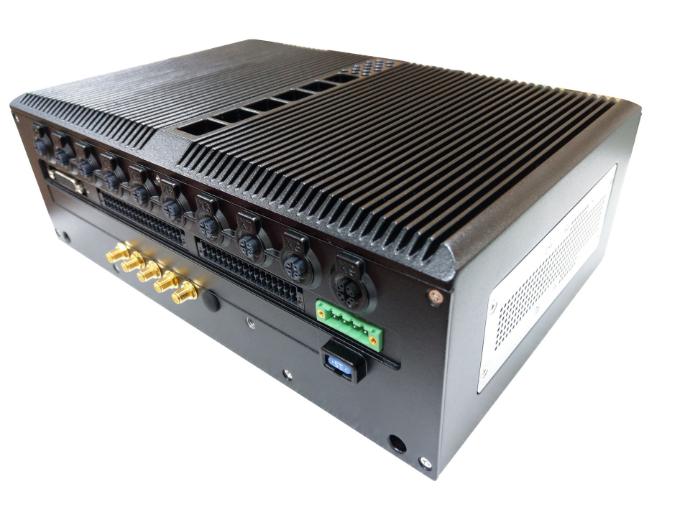
Case Study: Fanless Car‑Mount PC Case for Mass Transportation
Application
The project was developed for mass transportation systems, where reliability, safety, and durability are critical.
Requirements
To meet the demands of this environment, the case design needed to address three key requirements:
- Anti‑vibration protection – from the outer case down to sensitive internal components such as HDDs, using a specially designed mounting bracket.
- Passive cooling – achieved through an aluminum die‑cast enclosure with CNC‑machined bosses precisely aligned to each heat‑generating component (CPU, northbridge, southbridge).
- Robustness and corrosion resistance – ensured by incorporating stainless steel sheets for structural strength and anti‑rust performance.
Issues Encountered
During development, several manufacturing challenges emerged:
- Deformation: The top cover showed slight warping, leading to assembly difficulties.
- Surface defects: Air bubbles formed during molding, creating visible imperfections.
- Structural weakness: Thin fin structures suffered material loss under injection pressure, compromising cooling efficiency.
Solutions Implemented
Our engineering team tackled each issue systematically:
- Deformation: Optimized cooling time and temperature curves during tool release to stabilize the cover.
- Surface defects: Adjusted injection pressure to eliminate bubble formation.
- Structural weakness: Revised the fin design by thickening critical areas, while increasing injection pressure and time to ensure material integrity.
Results
The final product delivered on all requirements:
- A fanless PC case with internal cooling bosses that efficiently dissipate heat from each chip.
- A mounting bracket that secures components tightly while providing excellent anti‑vibration performance, ideal for transportation environments.
- A robust, rust‑resistant enclosure that assembles seamlessly without defects.
The client was highly satisfied with the outcome, praising both the reliability of the design and the quality of manufacturing.